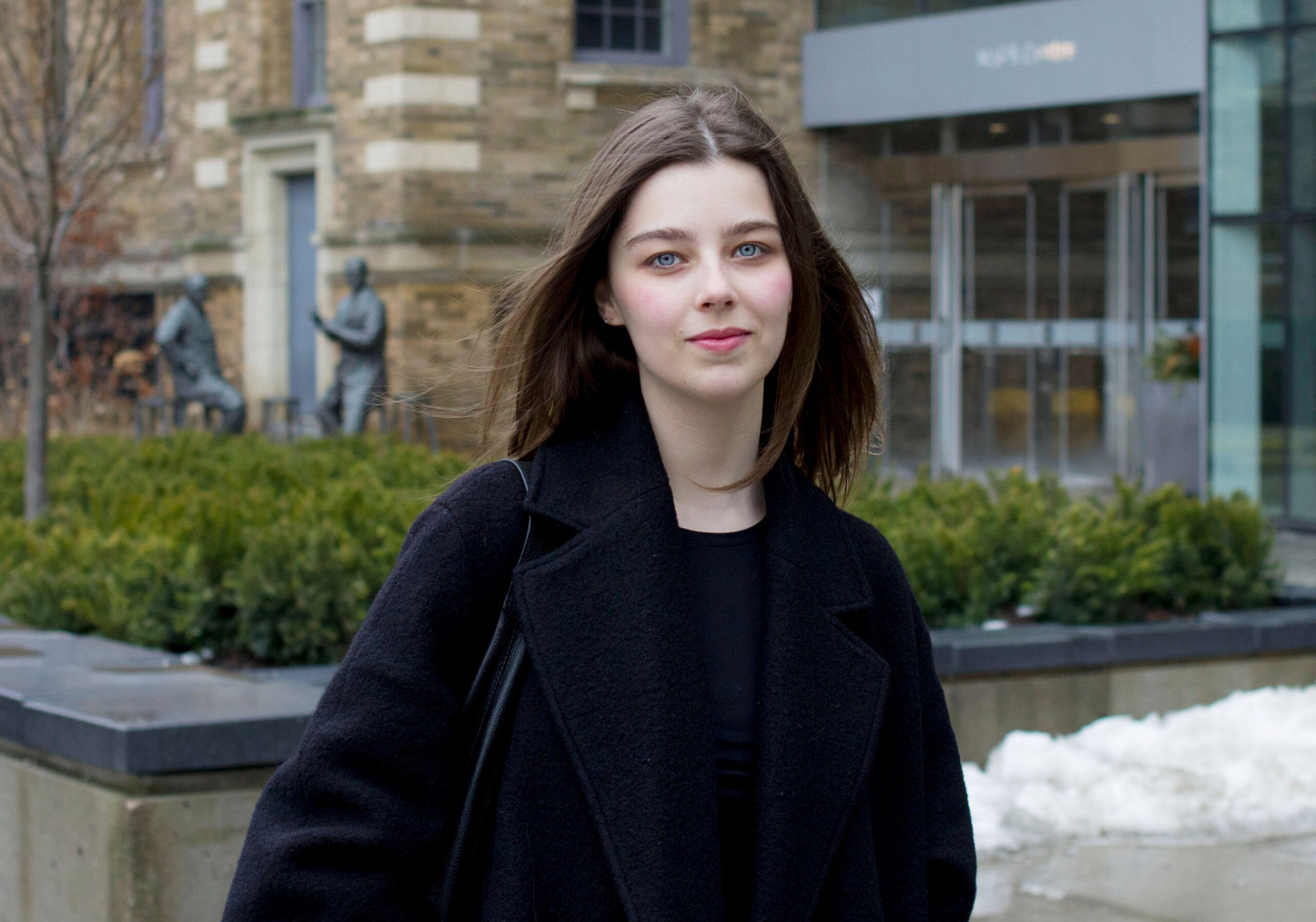
“I can remember the moment when I first saw the posting for a job at Atuka,” says Anna Oliinyk, one of our senior technicians. “It was something like 1:30 in the morning, and immediately I knew this was the perfect position for me.”
At the time, Anna was working as a research assistant in a molecular bio lab at York University, investigating the mechanisms of transcription regulation and post-translational protein modifications. The position at Atuka seemed relevant to her skills when it came to doing benchwork, which she had a strong background in.
But the bigger factor had to do with Atuka’s core purpose, expanding the frontiers of Parkinson’s disease research and helping to make life-changing therapeutics a reality. “There is a history of Parkinson’s in my family, so it’s something I have strong feelings about,” says Anna. “I’ve seen the suffering this disease causes. Being part of a team that contributes something to the research toward a cure is a huge motivator for me.”
As senior technician, Anna is closely involved in leading our studies from start to finish. On top of that, she continues to spend time expanding her knowledge. Last week, for Atuka Talks Science, a regular in-house forum, Anna presented recent data on the complexity of alpha-synuclein as a therapeutic target. “One of the illustrative points was how this complexity caused some drug candidates that target alpha-synuclein to fail in clinical trials, after showing efficacy in animal models.” The group then discussed takeaways that could inform the use of our existing and future animal models.
____
Where did your passion for molecular biology come from?
I went to medical school back home in Ukraine but eventually I realized how focused it is around patient care, whereas what excited me most about studying medicine was understanding the mechanisms behind disease. I wanted to know how life works. I wanted to know how disease works. I wanted to know how a cure works.
That’s when I came to Canada, because the biotech and biology research opportunities are much better here. As I was studying biology, every year of the program the courses were going deeper and deeper into the science. When we finally got to molecular biology, I said, “This is what I want to do.” I got really excited about the techniques you could use to study these things that are normally hard to look at.
Tell me about your personal experience with Parkinson’s?
I was just a kid in Ukraine when my now late grandfather suffered from the symptoms of Parkinson’s. That’s one of very few memories of him that I have after all these years. I remember the tremors. I remember how everyone was concerned about him, how he couldn’t sleep, and his anxieties.
And I could see how it was affecting the whole family, but there was nothing we could do, and the medicine could only help so much. So that left a bit of a mark on me.
It left me with a special interest in neurological conditions and Parkinson’s. I started reading more about it and asking my parents more. My dad used to believe that my grandfather got Parkinson’s by chance, that a lot of times it’s idiopathic and it just happens. Now that I have all this knowledge from working at Atuka, I’ve been asking different questions. My grandfather had spent years working in the fields with no protective equipment, and pesticide exposure is a known risk factor for the disease. Maybe it wasn’t just chance after all.
What’s your impression of working with the more senior scientists at Atuka?
They are ready to mentor. They are patient. They’re not trying to hoard knowledge. There’s a culture of sharing knowledge and sending papers around. They’re open to your questions and suggestions, and they actually listen. It’s something you don’t always see in people with their level of experience.